
Workshop on Web & Graphs, Responsible Intelligence, and Social Media (WEB&GRAPH 2026)
Co-located with the ACM Web Search and Data Mining (WSDM 2026), on February 26, 2026 (Boise, Idaho, USA)
Organisers
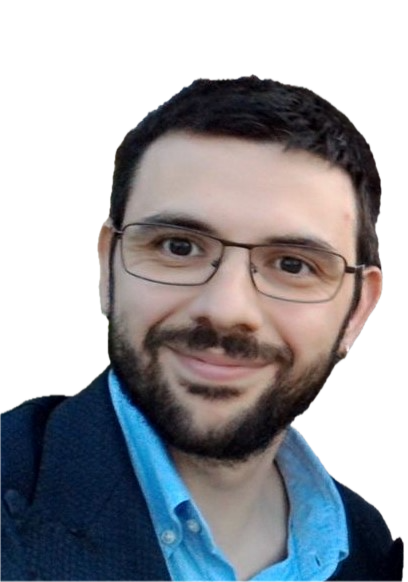
Matteo Spezialetti

Andrea D'Angelo
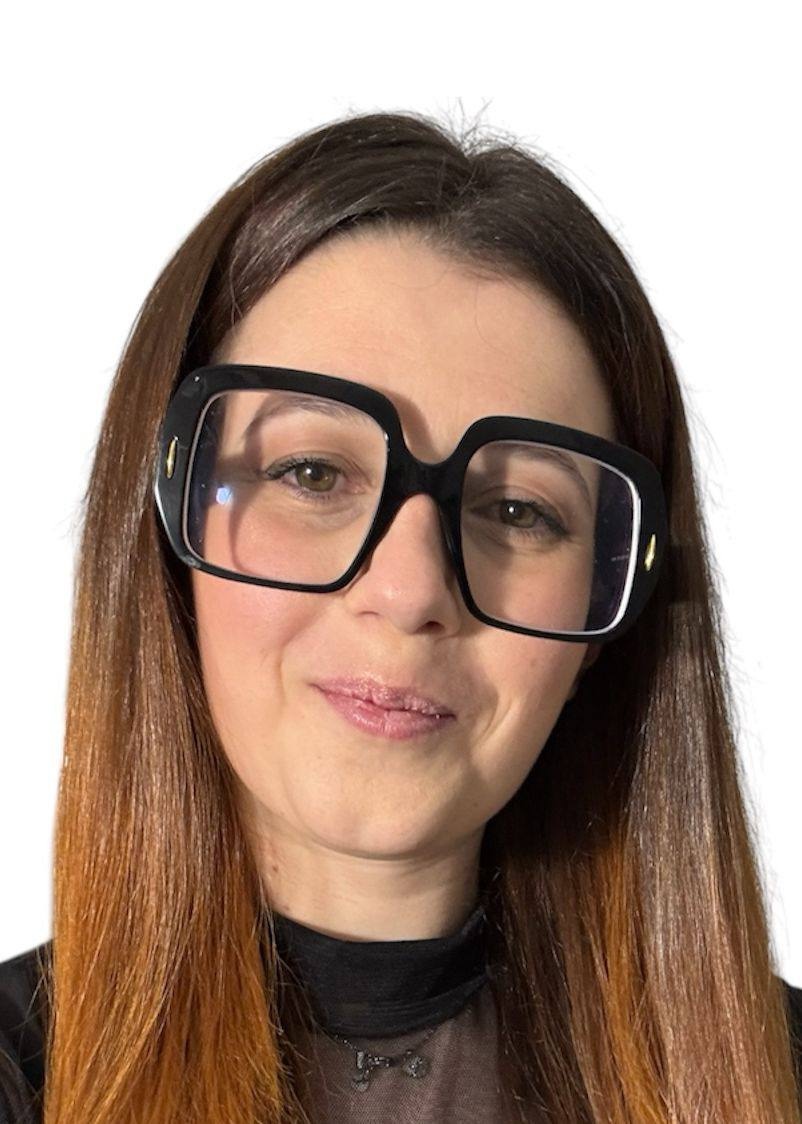
Francesca Ciccarelli

Giuseppe Costanzo
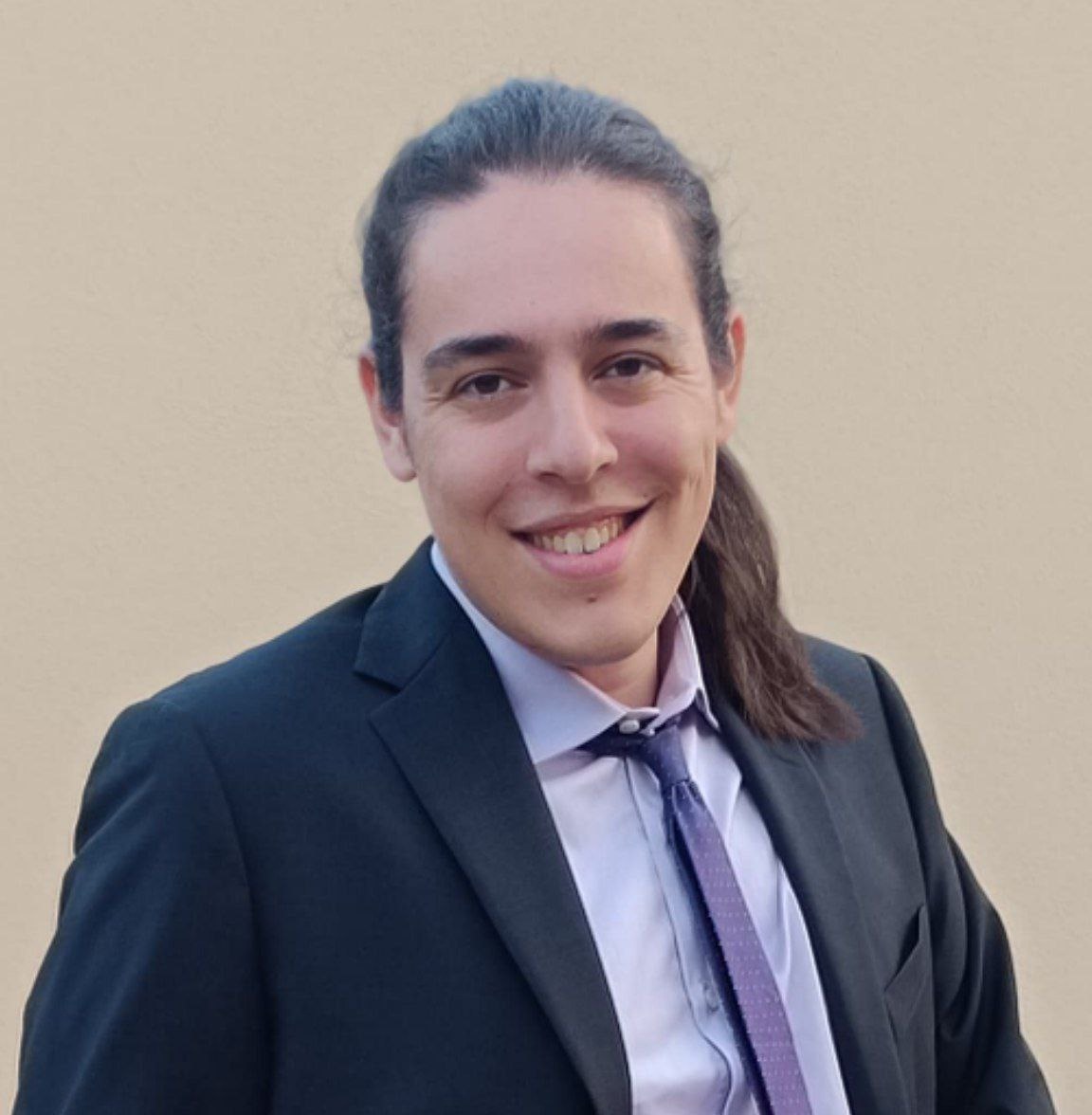
Daniele Fossemò
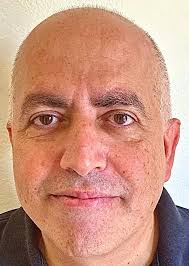
Filippo Mignosi
⚠️ Following several authors requests, we decided to extend the submission deadline from November 13 → November 27, 2025.
Table of contents
- Program
- Keynote Speaker Bio
- Accepted Papers
- Aims and Scope
- Important Dates
- Topics of Interests
- Submission and Publication
- Registration and Presentation Policy
- Organizers Contacts
Program
| Time | Activity | Note | Duration | Session |
|---|---|---|---|---|
| 09:00 | Welcome and Opening Remarks | 00:10 | ||
| 09:10 | Keynote Speaker - Prof. Evangelos Papalexakis It’s all about the latent structure: Tensor and graph methods for actionable insights and robust models |
00:40 | SESSION 1 | |
| 09:50 | Minimizing the cost of Pagerank fairness | Full Paper | 00:15 | SESSION 1 |
| 10:05 | TRuST-M: Evaluating User Trust and Explainability in LLM-Based Web Moderation Systems | Full Paper | 00:15 | SESSION 1 |
| 10:20 | LARIS: LLM-Agent Reinforced Intervention System for Misinformation Containment on Dynamic Social Graphs | Short Paper | 00:10 | SESSION 1 |
| 10:30 | Coffee Break | 00:30 | ||
| 11:00 | SPARK: Search Personalization via Agent-Driven Retrieval and Knowledge-sharing | Full Paper | 00:15 | SESSION 2 |
| 11:15 | HeteroMILE: a Multi-Level Graph Representation Learning framework for Heterogeneous Graphs | Full Paper | 00:15 | SESSION 2 |
| 11:30 | SciGraph-LLM: Automatic Knowledge Graph Construction from Scientific Papers | Full Paper | 00:15 | SESSION 2 |
| 11:45 | WISE: Web Information Satire and Fakeness Evaluation | Full Paper | 00:15 | SESSION 2 |
| 12:00 | Fine-Tuning or In-Context Learning? Understanding Their Trade-offs in Misinformation Detection | Short Paper | 00:10 | SESSION 2 |
| 12:10 | GoT-TrustIoT: Graph-of-Thought Reasoning for Explainable Trust Propagation in Dynamic IoT Networks | Short Paper | 00:10 | SESSION 2 |
| 12:20 | Local Fragments, Global Gains: Subgraph Counting using Graph Neural Networks | Short Paper | 00:10 | SESSION 2 |
| 12:35 | Lunch | 01:00 | ||
| 13:35 | Panel Discussion | 00:20 | ||
| 13:55 | Best Paper Award | 00:20 | ||
| 14:15 | Closing Remarks | 00:10 |
Accepted Papers
| Authors | Paper Title |
|---|---|
| Shubhajit Roy, Shrutimoy Das, Binita Maity, Anant Kumar and Anirban Dasgupta | Local Fragments, Global Gains: Subgraph Counting using Graph Neural Networks |
| Ivan Malashin, Igor Masich, Vadim Tynchenko, Aleksei Borodulin, Andrei Gantimurov, Vladimir Nelyub and Dmitry Martysyuk | SciGraph-LLM: Automatic Knowledge Graph Construction from Scientific Papers |
| Han Kyul Kim, Shriniwas Nayak and Andy Skumanich | Fine-Tuning or In-Context Learning? Understanding Their Trade-offs in Misinformation Detection |
| Yue Zhang, Yuntian He, Saket Gurukar and Srinivasan Parthasarathy | HeteroMILE: a Multi-Level Graph Representation Learning framework for Heterogeneous Graphs |
| Kamalakkannan Ravi, Hemant Surale and Jiann-Shiun Yuan | TRuST-M: Evaluating User Trust and Explainability in LLM-Based Web Moderation Systems |
| Gaurab Chhetri, Subasish Das and Tausif Islam Chowdhury | SPARK: Search Personalization via Agent-Driven Retrieval and Knowledge-sharing |
| Gaurab Chhetri, Subasish Das and Tausif Islam Chowdhury | WISE: Web Information Satire and Fakeness Evaluation |
| Ravi Gupta, Nishant Singh, Ramya Kakarlapudi and Shiksha Patel | LARIS: LLM-Agent Reinforced Intervention System for Misinformation Containment on Dynamic Social Graphs |
| Ravi Gupta, Nishant Singh, Ramya Kakarlapudi and Praveen Chinapla | GoT-TrustIoT: Graph-of-Thought Reasoning for Explainable Trust Propagation in Dynamic IoT Networks |
| Spyridon Tzimas, Themistoklis Nikas, Evaggelia Pitoura and Panayiotis Tsaparas | Minimizing the cost of Pagerank fairness |
| Sohini Roychowdhury, Doris Wang, Qian Ge, Joy Mu and Srihari Reddy | COFFEE: COdesign Framework for Feature Enriched Embeddings in Ads-Ranking Systems |
Aims and Scope
The Web&Graph aims to bring together researchers and practitioners from web search, data mining, artificial intelligence, and social sciences to discuss algorithmic, theoretical, and methodological advances for dynamic, reliable, and human-aligned graph analytics.
The workshop will focus on the algorithmic foundations and the applied aspects of graph reasoning for evolving networks, misinformation detection, provenance tracking, and human–AI collaboration.
Keynote Speaker Bio
Evangelos Papalexakis is a Full Professor and the Ross Family Chair in the Computer Science & Engineering Department at the University of California Riverside. His research spans the areas of data science, signal processing, machine learning, and artificial intelligence.
A major focus of his research has been on the development and advancement of tensor methods and their applications in high-impact real-world problems, especially tensor decompositions for machine learning and data science.
His work has received several distinctions, including the 2017 SIGKDD Dissertation Award (runner-up), the National Science Foundation CAREER Award, the 2021 IEEE DSAA Next Generation Data Scientist Award, and the ICDM 2022 Tao Li Award, which recognizes excellence among early-career researchers.
Important Dates
- Paper Submissions:
November 13-> November 27, 2025. - Notifications: December 18, 2025
- Workshop: February 26, 2026
All deadlines are 11:59 pm AoE.
Topics of Interests
We particularly welcome works that provide innovative and interpretable solutions or address real-world challenges by combining graphs, AI, and web algorithms. The expected, but not exhaustive, contributions are:
- Theoretical Topics
- Design and analysis of graph algorithms for web and social networks
- Optimization and approximation on large and dynamic graphs
- Diffusion modeling, and algorithmic fairness
- Graph compression, sparsification, and structure-aware pruning
- Robust, explainable, and provable graph representations
- Technical and Applied Topics
- Graph neural networks and graph transformers for web data
- Graph-based trust, credibility, and misinformation detection
- Influence propagation and provenance tracking for social domains
- Integration of LLMs with structured graph representations
- Human-in-the-loop knowledge-graph curation and correction
- Deep learning on dynamic and streaming graph data
- Social network analytics and algorithmic transparency
- Optimization frameworks for scalable and interpretable graph learning
Submission and Publication
We invite authors to submit unpublished, original papers written in English. Submitted papers should not have been previously published or accepted for publication in substantially similar form in any peer-reviewed venue, such as journals, conferences, or workshops. Manuscripts must be submitted in PDF according to the new ACM format published in ACM guidelines (use documentclass [sigconf,anonymous,review]{acmart}).
We will consider two different submission types:
- Full papers (up to 9 pages + unlimited references) should clearly describe the state of the art and state the proposal's contribution in the application domain, even if presenting preliminary results. In particular, research papers should describe the methodology in detail, experiments should be repeatable, and a comparison with the existing approaches in the literature should be made.
- Short and position papers (up to 4 pages all included) should introduce new points of view on the workshop topics or summarize a group's experience in the field.
Submissions should not exceed the indicated pages, including any diagrams and references. All submissions will undergo a double-blind review process and be reviewed by at least three reviewers based on relevance to the workshop, novelty/originality, significance, technical quality and correctness, quality and clarity of presentation, quality of references, and reproducibility. Submitted papers will be rejected without review if they are not correctly anonymized, do not comply with the template, or do not follow the above guidelines.
Generative AI Usage Policy. Generative AI models, including Chat-GPT, BARD, LLaMA, or similar LLMs, do not satisfy the criteria for authorship of papers accepted in the workshop. If authors use an LLM in any part of the paper-writing process, they assume full responsibility for all content, including checking for plagiarism and correctness of all text.
Proceedings This year, the WSDM organization will publish a Companion Proceedings Volume that includes the workshop papers.
Submission website:
Papers must be submitted through the Easychair system for this conference . Feel free to contact us should you encounter any issue.
Registration and Presentation Policy
Submitted manuscripts must adhere to the ACM authorship policy. In particular, (i) each author must be the creator or originator of an idea in the work; (ii) each author must make substantial contributions to the work; and (iii) each author must be accountable for the work that was done and its presentation in a publication. The policy was recently updated to govern the use of generative AI tools in authoring papers.
At least one author of each accepted paper must register for the conference (either 3-day or 5-day). A paper fee may be required. Please refer to the Registration policy of WSDM2026 for details.
Program Committee
We would like to express our gratitude to all members of the Program Committee, listed below:
- Baek Heon, Business School of Sogang University
- Boratto Ludovico, University of Cagliari
- Ciccarelli Francesca, University of L’Aquila
- Cinus Federico, Sapienza University of Rome
- Costanzo Giuseppe, University of L’Aquila
- D’Angelo Andrea, University of L’Aquila
- D’Asaro Fabio, University of Salento
- Du Yingpeng, Nanyang Technological University
- Fossemò Daniele, University of L’Aquila
- Gupta Ravi, AMD Corporation
- Liu Yanming, Zhejiang University
- Mignosi Filippo, University of L’Aquila
- Polsinelli Matteo, University of Salerno
- Raggioli Luca, University of Naples Federico II
- Roychowdhury Sohini, Meta
- Spezialetti Matteo, University of L’Aquila
- Tzimas Spyridon, University of Ioannina
Organizers Contacts
For general inquiries about the workshop, please email matteo.spezialetti@univaq.it, andrea.dangelo6@graduate.univaq.it, francesca.ciccarelli@graduate.univaq.it, giuseppe.costanzo@graduate.univaq.it, daniele.fossemo@graduate.univaq.it